
Sensing
Calibrated temperature and humidity are captured where conditions affect product quality.
KRYOS combines calibrated sensing, live monitoring, alerts, reports, and rollout support in one product platform for regulated storage and transport operations.
Temperature monitoring is the primary operational layer of the product. It keeps current conditions, threshold context, and site-wide visibility connected before teams move into alerts, reporting, or rollout review.
Use one real monitoring view here. The goal is to show current conditions, trends, and threshold context in the same working surface.
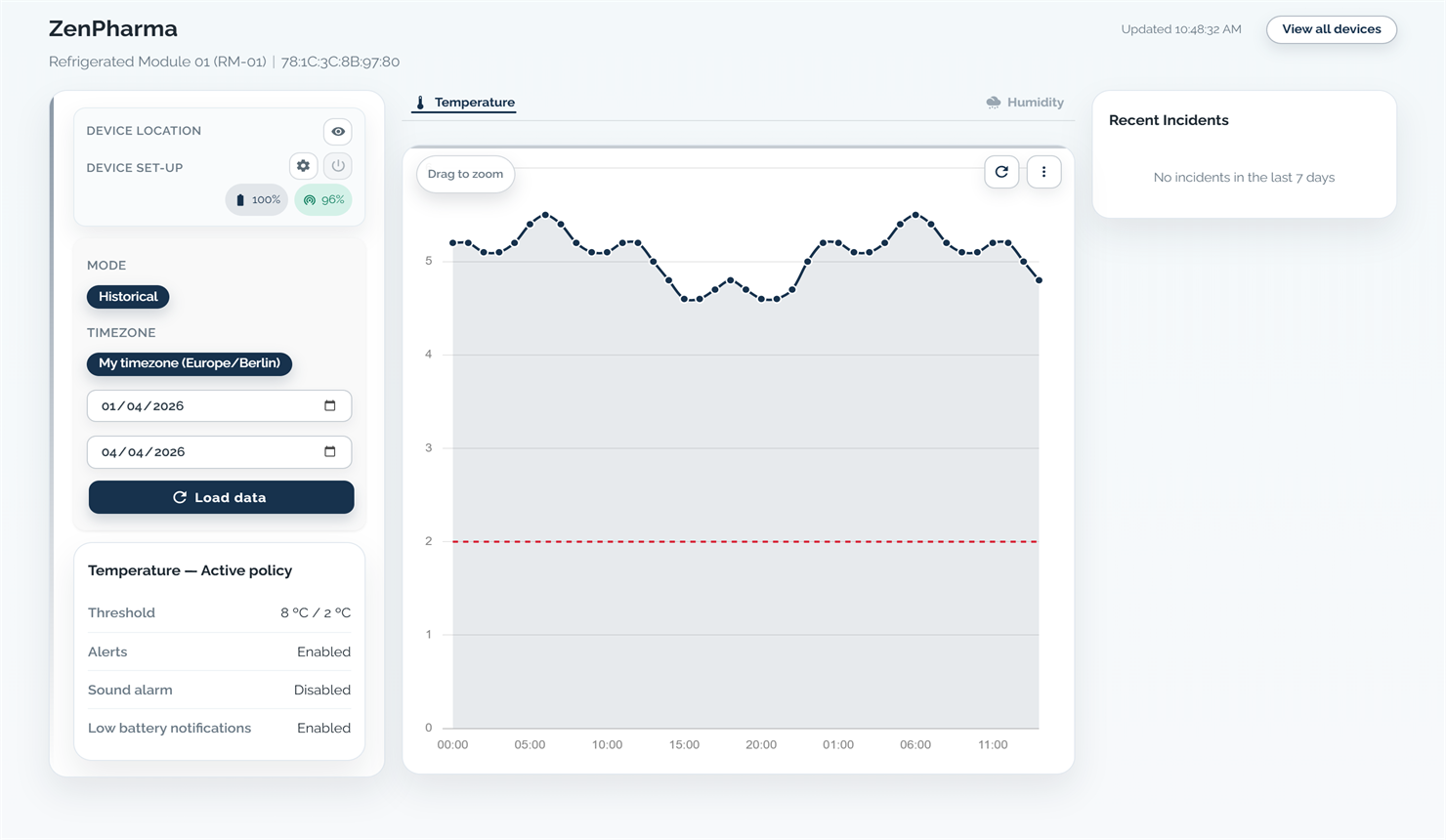
Recommended replacement asset: one focused software screenshot around 4:3 or 5:4 showing current status, graph, and threshold context.
Move from the overview into the product areas that matter for monitoring, alerts, records, hardware, and deployment planning.
Switch between the core operating surfaces to see how monitoring, alert handling, and review-ready records work together.
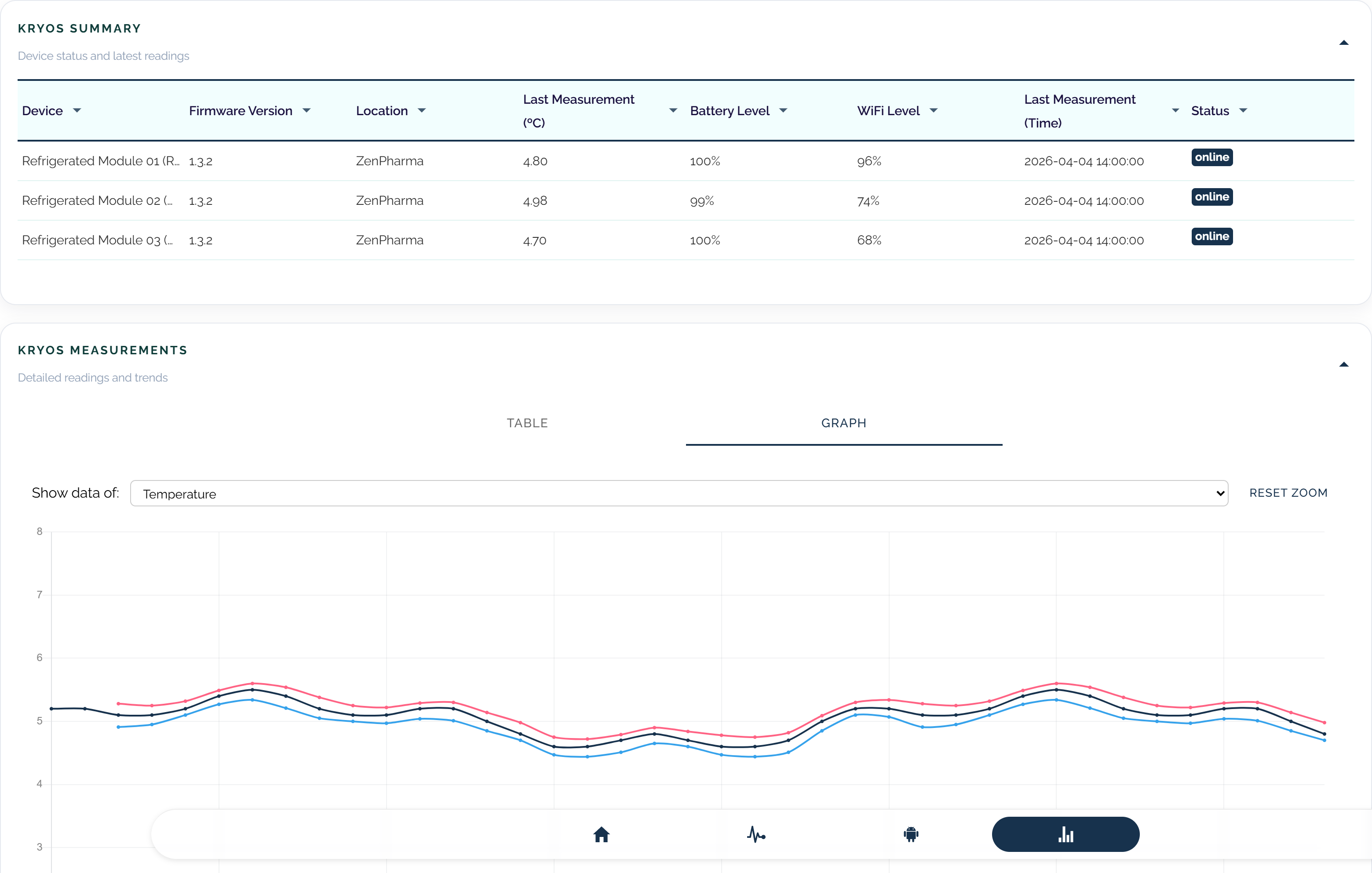
The monitoring module combines latest readings, device status, and trend curves in one working surface.
This tab should prove the day-to-day operating surface of the product.
The alert module holds incident context, proof graphs, timestamps, and the actions required for documented follow-up.
This tab should show accountable alert handling rather than notification delivery alone.

Monitoring data, alert events, and review context stay connected so the reporting layer can support audits and internal review.
A dedicated reports screenshot would improve this module later, but the structure already reflects the page job.
The overview should show how sensing, monitoring, alerts, and records connect, without restaging the full compliance architecture from the homepage.
Calibrated temperature and humidity are captured where conditions affect product quality.
Current status, trend lines, and coverage stay visible across units, routes, and sites.
Excursions become accountable alerts with acknowledgement and escalation paths.
Events, review timelines, and exports stay connected from measurement to audit trail.
Sensor identity and calibration documentation stay connected to the product layer.
Rules are matched to each site, room, fridge, vehicle, or storage zone.
Installation support, validation expectations, and review workflows keep rollout aligned with operations.
The product combines calibrated sensing with a rollout path that works for regulated environments.
Use sensors and probes that support traceable monitoring instead of treating hardware as an afterthought.
Prepare rollout, installation, and validation support for environments that need a credible product fit from day one.
Start with a guided demo for complex environments, or review pricing if the rollout path is straightforward.