
Product feature

Temperature and humidity monitoring for controlled environments.

KRYOS adds moisture context when rooms, storage areas, or sensitive workflows need more than temperature readings alone.

  • Add relative humidity as a secondary parameter only in controlled environments that need it.
  • Route humidity alerts through the same threshold, notification, and review workflow as temperature events.
  • Keep temperature and humidity records tied to the monitored asset instead of maintaining a separate manual log.
Humidity monitoring context
Humidity trend

Relative humidity appears beside temperature when moisture changes how a space should be interpreted.

Active policy

Thresholds, humidity alerts, sound alarm, and low-battery settings remain visible before review.

Incident context

Recent incidents and historical readings stay attached to the same monitored asset.
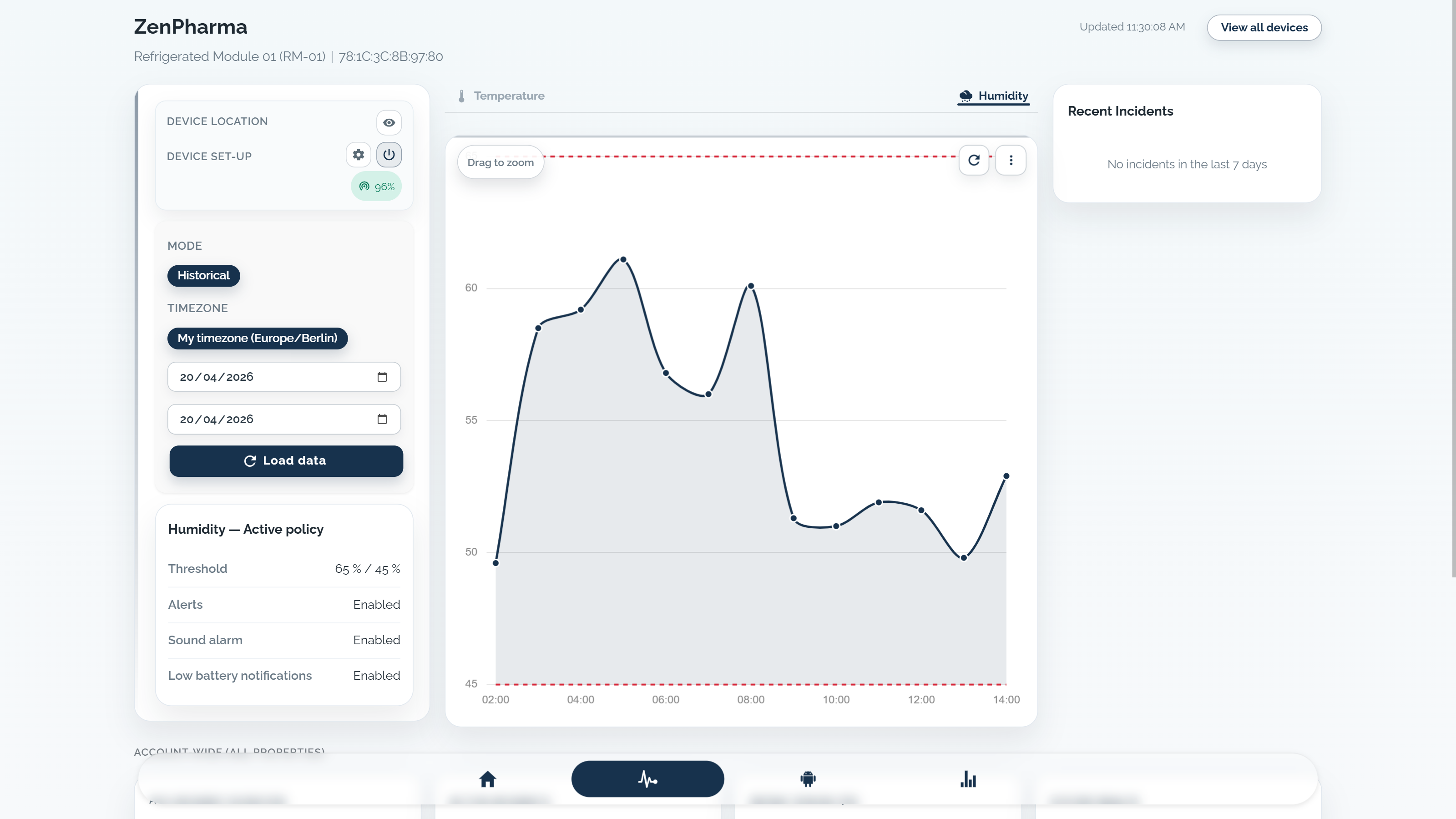
KRYOS humidity monitoring dashboard with the humidity tab active, a relative humidity trend, humidity threshold policy, and recent incident context.
KRYOS keeps relative humidity, threshold policy, alert state, and review context in the same dashboard as the temperature monitoring workflow.

Where humidity belongs in the monitoring plan

Humidity monitoring is useful when moisture can affect storage stability, packaging condition, product handling, or how a team interprets a temperature event.

Humidity as a secondary parameter

Add humidity only where it matters

Temperature remains the main control point for most refrigerated assets. Add humidity when the controlled environment needs that extra condition tracked.

Relative humidity beside temperature

A temperature and humidity sensor can keep relative humidity visible for rooms, cold areas, cabinets, packaging zones, and sensitive storage spaces.

Humidity alerts on the same path

When moisture conditions move outside the defined range, humidity alerts can follow the same daily response and later review flow.

One environmental history

Temperature and humidity readings share one monitoring history, so teams can compare conditions during checks, incidents, reports, and reviews.

Keep humidity in the same operating path

01. Monitor humidity where it is relevant

Teams choose the rooms, storage areas, or assets where relative humidity should sit alongside temperature and device status.

02. Keep response and records on the same path

Humidity alerts, notes, historical readings, and reports remain connected to the same monitored environment.

Controlled environments with more context

Moisture readings can help explain environmental changes caused by doors, airflow, packaging, or room conditions.

No extra manual humidity log

Teams avoid a separate spreadsheet when moisture readings, alerts, and review history remain in KRYOS.

Add humidity where your monitoring plan needs it

Request a demo if you need to decide which rooms, assets, thresholds, and review records should include relative humidity. If standard temperature monitoring is enough, pricing is the faster path.

  • Temperature remains central
  • Humidity alerts when needed
  • One environmental history